Most portable fire extinguishers in a workplace, shop or shared building have a small tag or label hanging from them or fixed near the handle. It is worth knowing what it is there for.
The tag is a service record
The tag is a record that a service person has inspected the extinguisher, and when. It gives anyone who walks up to the extinguisher a quick way to see that the unit has been looked at and is part of a maintenance routine, without hunting through a folder in the office.
Tags are usually marked at each visit, so over time they build up a short history. Different service companies use slightly different tags, and the way they are marked can vary. If you can’t make sense of yours, ask whoever services your equipment to explain it next time they are on site.
How often an extinguisher should be serviced, and what each service involves, is set out in the Australian Standards for routine servicing and depends on the type of extinguisher. The person responsible for the building, or your fire contractor, can tell you what applies to you. Fire Protection Association Australia is a good place to start if you want to understand how the industry works.
What the tag does not tell you
A tag tells you about the last time someone checked the extinguisher. It can’t tell you what has happened since. An extinguisher can be knocked, moved, used for a moment and put back, or buried behind a delivery the day after it was serviced.
That is why a quick look from the people who work in the building is so useful. You are there every day. The service person is not.
What you can glance at yourself
You don’t need any training to notice the basics. Next time you walk past an extinguisher, take a few seconds to check these things.
- It is there. Extinguishers go missing, get borrowed to prop a door open, or are moved during a clean-up and never put back.
- You can reach it. Nothing should be stacked in front of it or hung over it. You should be able to walk straight up and lift it off its bracket.
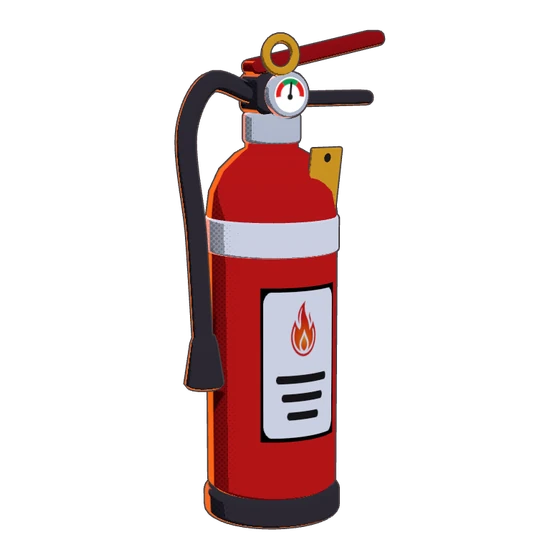
- The gauge is in the green. If the extinguisher has a pressure gauge, the needle should sit in the green zone. Not every type has a gauge, so don’t worry if yours has none.
- The pin and seal are intact. The safety pin should be in place, with its seal or tie unbroken. A missing pin or broken seal suggests the extinguisher may have been used or tampered with.
- There is no obvious damage. Look for dents, rust, a cracked or perished hose, a blocked nozzle, or a label you can no longer read.
- The tag is there. If there is no tag at all, or you can’t tell when the unit was last checked, that is worth following up.
None of this replaces a proper service. It is a way of catching problems between visits.
When to call someone
Get in touch with whoever looks after your fire equipment if:
- the gauge needle is outside the green
- the pin is missing or the seal is broken
- the extinguisher has been used, even briefly
- it is damaged, corroded or leaking
- the tag is missing, unreadable or looks well out of date
- an extinguisher has disappeared from its bracket
An extinguisher that has been used, even for a second, should be treated as empty until it has been checked.
If you are a tenant, your landlord or building manager may be the one who arranges servicing, so tell them what you found.
A word on using one
An extinguisher is only for a small fire, and only if it is safe and you have a clear way out. If you are in any doubt, get everyone out and stay out. In an emergency, call Triple Zero (000).
If your extinguishers need a look, or you are not sure what the tags are telling you, V&H Fire Group can help anywhere between the Central Coast and Newcastle. Call Byron on 0483 371 134.
This article is general information, not advice for your building. For what applies to your premises, talk to us on site.